Clownfish: Facts, Pictures and Video!
26th edition of Marine Life monthly post. Marine Life post published every 19th of the month. It aims to share information on marine life species and to promote their conservation. All images and video in this post are taken by Indah Susanti unless stated otherwise.

I took many images of clownfish during my scuba diving. To my surprise, the clownfish or anemonefish has 30 different species. By far I have seen only five species of clownfish – not too impressive, I know. I should do more scuba diving!


Habitat
Clownfish live in warm water of Indian and Pacific Ocean, that includes countries from South East Asia, Australia, Japan to Egypt. The clownfish always lives within the tentacles of a sea anemone. The sea anemone produces a toxin that protects the clownfish from their predators. The clownfish usually wiggle their tail just like dancing and the ‘dance’ is helping the sea anemone host to breathe and help the anemone to aerate themselves, which means the clownfish and anemone need each other to survive living in the ocean.
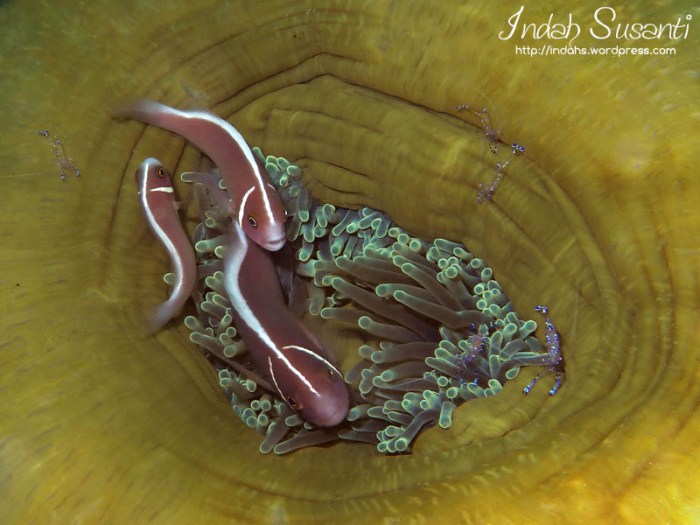
Pink Skunk Clownfish
Hermaphrodites & Mating
Clownfish are born male, but they have the ability to turn themselves female. The weird thing is once they become female, they can’t be male. Usually the gender change during the mating, the dominant fish become female and her size usually bigger than the male. The female clownfish is the leader of the group or the family who lives together in the same sea anemone.

Ocellaris Clownfish. The biggest clownfish is a female.
Finding Nemo – the Movie Impacts to the wild Clownfish
According to National Geographic, since “Finding Nemo” premiered clownfish sales for aquariums have tripled. There are some concerns that some areas in the sea being overfished to meet the demands and many buyers just buy the fish without knowledge how to properly care for the fish.
I have seen clownfish live in their natural habitat in the sea and as well the clownfish in the aquarium. By far I like it better to see them swimming in the sea, where they belong, just like they are in this following video.
The video was taken during our scuba diving in Pescador Island, the Philippines. Hope you enjoy seeing the wild clownfish through this short video. Have a great week!
 indahs: dive, travel & photography
It’s a good excuse to do more diving!!
Indeed! I hope I can see them again soon 🙂
Beautiful photos Indah. And thanks for all the fun facts about clownfish. 🙂
Thank you! Truly a pleasure to share the magic of underwater world 🙂
Your passion makes it more interesting!
Gorgeous shots of the fish.
Thank you so much 🙂
Brilliant!
Thank you!!
Un grand merci Indah pour tes merveilleuses photos sous l’eau, c’est magnifique 🙂
Mes amitiés
Indah, Your Marine Life posts are always amazing & impressive especially when they are your photos from scuba diving!!! You are so talented!!! Compliments!!!!!!!!!! Phil
Thank you so much, Phil! Your comment make my day! Have a wonderful weekend!
Love Love LOVE clown fish!!! Always amazed at how many different species (and colours) there are!!! Thank you for the awesome photographs 🙂
It’s hard for not liking them! They are too cute!! Thank you for dropping by 😉
What a disappointing outcome after such a cute movie
I agree, it is better to see them in their natural habitat.