Clownfish: Facts, Pictures and Video!
26th edition of Marine Life monthly post. Marine Life post published every 19th of the month. It aims to share information on marine life species and to promote their conservation. All images and video in this post are taken by Indah Susanti unless stated otherwise.

I took many images of clownfish during my scuba diving. To my surprise, the clownfish or anemonefish has 30 different species. By far I have seen only five species of clownfish – not too impressive, I know. I should do more scuba diving!


Habitat
Clownfish live in warm water of Indian and Pacific Ocean, that includes countries from South East Asia, Australia, Japan to Egypt. The clownfish always lives within the tentacles of a sea anemone. The sea anemone produces a toxin that protects the clownfish from their predators. The clownfish usually wiggle their tail just like dancing and the ‘dance’ is helping the sea anemone host to breathe and help the anemone to aerate themselves, which means the clownfish and anemone need each other to survive living in the ocean.
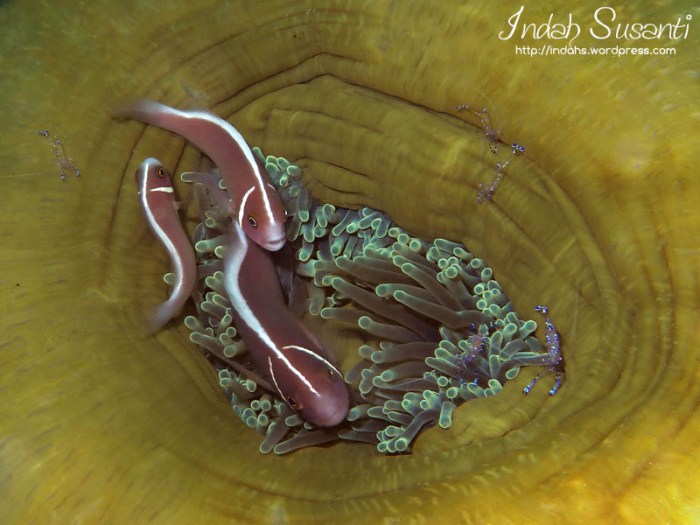
Pink Skunk Clownfish
Hermaphrodites & Mating
Clownfish are born male, but they have the ability to turn themselves female. The weird thing is once they become female, they can’t be male. Usually the gender change during the mating, the dominant fish become female and her size usually bigger than the male. The female clownfish is the leader of the group or the family who lives together in the same sea anemone.

Ocellaris Clownfish. The biggest clownfish is a female.
Finding Nemo – the Movie Impacts to the wild Clownfish
According to National Geographic, since “Finding Nemo” premiered clownfish sales for aquariums have tripled. There are some concerns that some areas in the sea being overfished to meet the demands and many buyers just buy the fish without knowledge how to properly care for the fish.
I have seen clownfish live in their natural habitat in the sea and as well the clownfish in the aquarium. By far I like it better to see them swimming in the sea, where they belong, just like they are in this following video.
The video was taken during our scuba diving in Pescador Island, the Philippines. Hope you enjoy seeing the wild clownfish through this short video. Have a great week!
 indahs: dive, travel & photography
So interesting and beautiful 🙂 Yes, we have been learning a lot about aquariums lately and they are not good for fishes. It’s so sad that Finding Nemo has tripled the visitors at aquariums, because the film was clearly showing that fishes want to live their own lives in the wild. I’m glad you visit and observe them in the wild. So beautiful 🙂
Thank you so much for your supports, Miranda! Indeed, it’s better to let them live in the sea. Maybe we can see them when we are swimming in the sea or the ocean 🙂
Absolutely 🙂 That would be wonderful ❤
Wah kok videonya gabisa diputer ya? Mungkin ada masalah di komputer saya.
Nemo itu saya anggap sebagai point of interestnya bawah laut. Kalau sudah liat nemo aja sudah senang rasanya (selain liat soft corals).
wah, aku mesti cek lagi sepertinya. Kadang susah juga ini media dari wordpress. Bener banget soal nemo, rasanya ada yg kurang juga kalau belum lihat Nemo pas menyelam.. 🙂
Indah
Always a joy and an education to read your posts
Big hugs
bapak john
Thank you so much, Bapak John!
Absolutely beautiful 🙂 ! Bye. K
Thank you, Kamila!
Zoos and aquariums can actually help the environment by educating the public. I don’t like it when they just make a show of the animals or don’t care for them properly. Great post Indah.
I agree the zoos and aquariums are helping to educate the public and they usually do scientific research to conserve the ocean and the wildlife. I dislike the animal shows too, I feel like it is not their nature to do so, especially when they were captured from the wild.
beautiful colours, happy pictures.. txs
Thank you so much!
Amazing pictures
Thank you so much! 🙂
Wow, I didn’t know they can change from male to female. Your posts are so educational!
Marine species is full of surprises! 🙂