We need Sea Cucumbers and Their Poo to Save Our Seas
38th edition of Marine Life monthly post. Marine Life post published every 19th of the month. It aims to share information about the marine life species and to promote their conservation. All images in this post are taken by Indah Susanti unless stated otherwise.

Sea Cucumber – Pearsonothuria graeffei – the picture was taken in Indonesia
Sea cucumbers are known in Asia as delicacy and medicine. The population of the sea cucumbers is now declining as a result of human’s increasing consumption. There are hundreds of species of sea cucumbers on the International Union for Conservation of Nature (IUCN) Red List of Threatened Species, of which 7 are classified as ‘Endangered’, and 8 are classified as ‘Vulnerable to extinction’ (source).
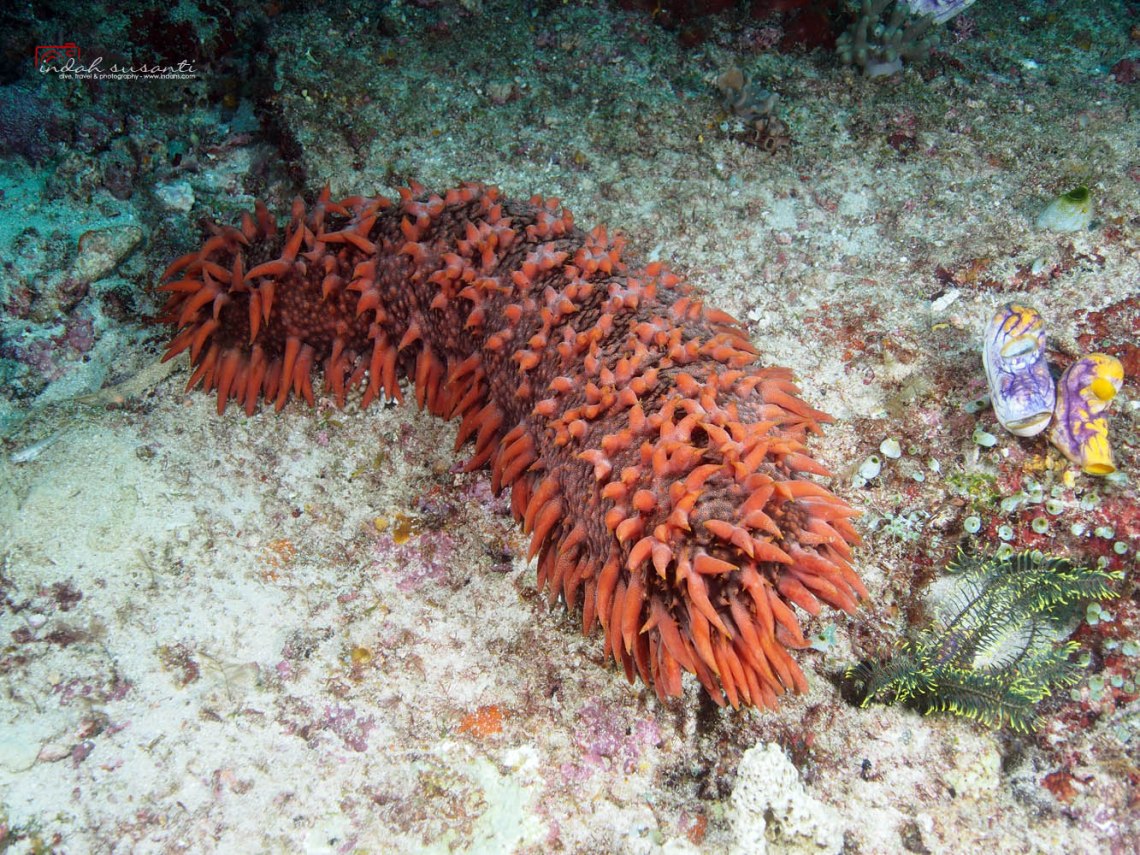
Sea Cucumber – Thelenota ananas (status: endangered) – the picture was taken in Indonesia
It becomes a concern that the species may extinct if the humans’ demand for the sea cucumber keeps increasing. Regardless of the cucumber name as given by humans, the sea cucumber is actually not a sea plant or fruit but it is an animal that named after their bodies that similar to cucumber. Their role in the ocean is very important that they may save coral reefs that currently dying due to the climate change.

Red-lined sea cucumber – Thelenota rubrolineata – the picture was taken in Indonesia
According to a research by University of Sydney’s One Tree Island station (Australia), the sea cucumber holds the key to saving the world’s coral reefs from Ocean Acidification (source). Ocean Acidification (OA) is a term used to describe significant changes to the chemistry of the ocean – it occurs when carbon dioxide gas (or CO2) is absorbed by the ocean and reacts with seawater to produce acid. The impacts of OA could be negative to the environment (climate change such as severe weather, warmer seawater), dying marine animals and of course, in the end, it will have impacts on humans’ livelihood and coastal livings.

Some sea cucumbers species are as tiny as nudibranch
Sea cucumbers are known to be a species with function as “vacuum cleaner of the ocean”. They eat the deads, the poop of other marine animals, well basically, they eat things like the carcasses and excrement in the sea, and they ingest sands too. Their role is already crucial to clean the sea, then their poo is revealed to have benefits to the seas and the coral reefs such as increasing pH levels in the water and calcium carbonate (CaCO3) that important for the coral reefs, and the poo also serves to fertilize and providing nutrients for the corals and the surrounding area. If you wonder what the sea cucumbers’ poo looked like, they actually look like sand. Following is an image of the “sand” poop that I saw when scuba diving in Indonesia. Sea cucumber was a prime suspect to produce such poo.
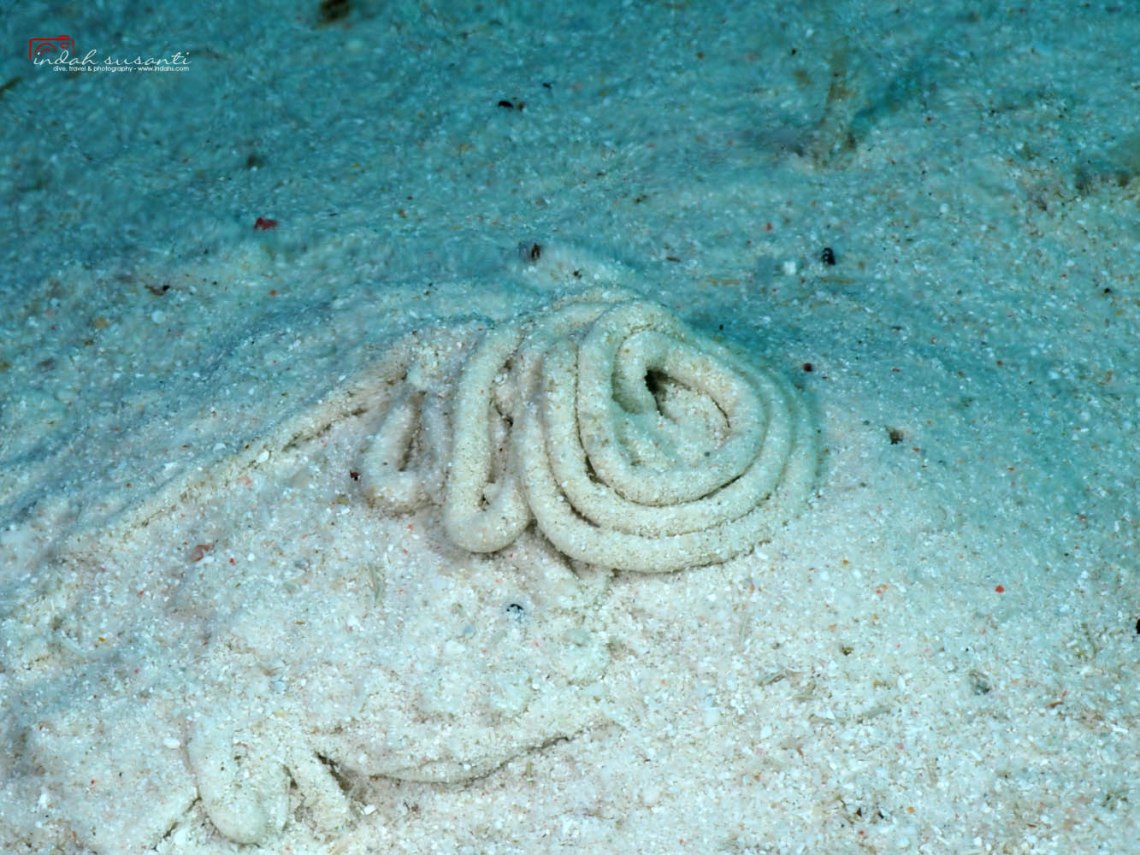
Sand Poo – the image was taken in Indonesia
Currently, 25% of the ocean’s fish depend on healthy coral reefs, if that’s not convincing enough, NOAA estimates the net economic value of the world’s coral reefs is nearly 29.8 billion U.S. dollars per year. Not to mention the cultural values that related to the coral reefs as practiced by the indigenous and coastal ethnic groups. They will be gone too. Without healthy corals, the ocean is at risk of dying and as well some part of humanities. It has started in the Great Barrier Reef (Australia) – Half of the Great Barrier Reef has died since 2016 — here’s what happens if all coral reefs on Earth die off.
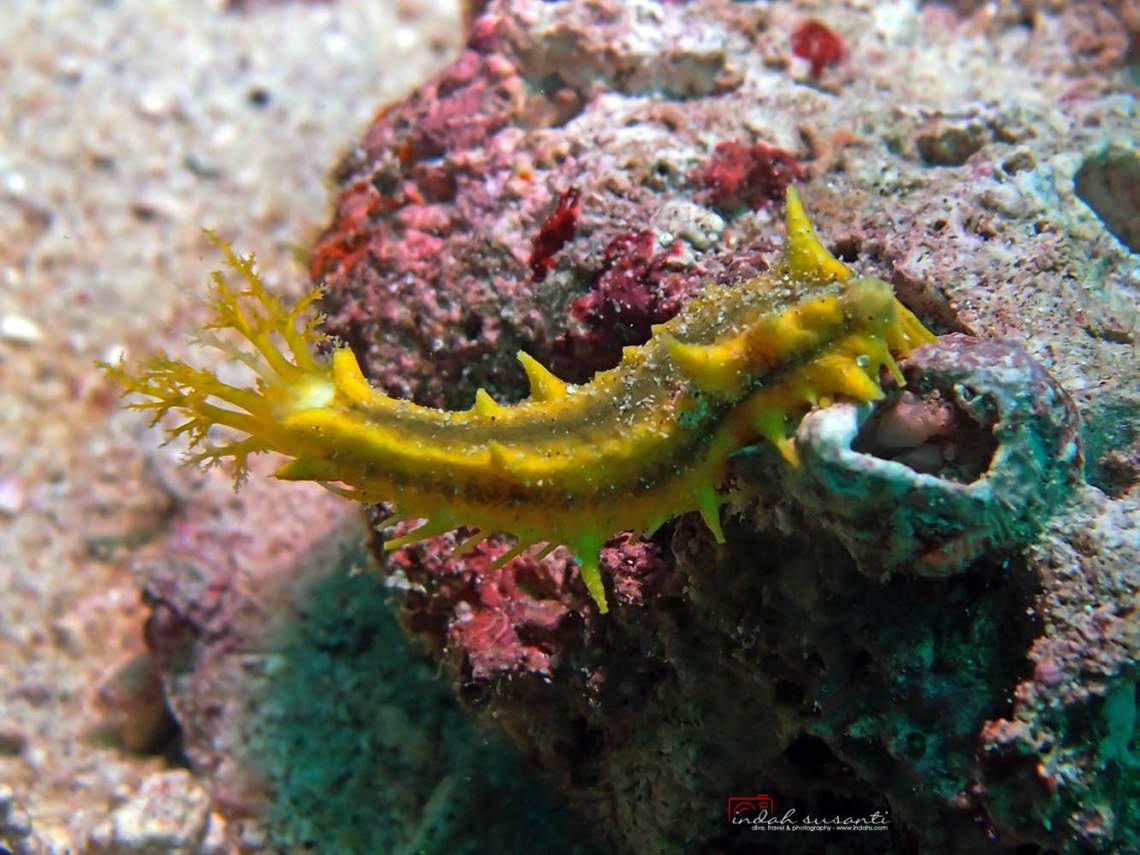
Sea Cucumber – Colochirus robustus – the picture was taken in Indonesia
The research’ finding of the importance of the sea cucumbers to the coral reef and the sea was announced in the year 2012, but unfortunately, as reported by the National Geographic this year, the number of sea cucumbers is declining following the increasing demand of the sea cucumbers. I guess it’s time to control human’s appetite of certain delicacy and conserve the wildlife to provide stability for them and for our planet.
 indahs: dive, travel & photography
Yes, Indah, a valuable and relevant post right now, this is a serious concern.
Thank you for such a responsible sharing
Always with a big hug
bapak john
I do hope that mankind wakes up and realizes the overconsumption of the sea cucumbers is endangering coral reefs in the oceans at Large. We all have to work together in order to reverse the damage that has already been done. Great informative and extremely important post, Indah. May this post be heard across the world! Most excellent photographs all of which I so enjoyed looking at. 👏👏👏
Great Indah !
Indah, FANTASTIC photography by YOU!!! This was quite an education for most of us, I would think, about sea cucumbers, their popularity as an Asian delicacy & medicine, & their necessity for the health of coral reefs and the sea!!! And from the photos & names, there are many different sea cucumbers!!! GREAT JOB HERE AS ALWAYS!!! Phil
I sure hope many read this and understand how important our ecosystem depends on each other to survive!
Thank you Indah! Great post!
Indah sekali kak indah..terakhir menyelam 2009 saya hehehe
This is fascinating, Indah! I hadn’t heard of the sea cucumber before your article, but I’m so glad you wrote about this! Thank you, my dear! Cher xo
Informative and important post along with wonderful images. Thanks Indah.